

"You shouldn't feel sorry for Ukraine"
The nation is a victim. The people refuse to be.


Arriving in Lviv, you are told that it is more comparable with city-break destinations in neighbouring nations than a city at war. That is not quite a comforting lie, but a noble understatement. For sure, the city is less risky than many in Ukraine. Aerial attacks are rare (though there was a deadly one Wednesday night). The buildings are not pockmarked with shrapnel marks. People move about unafraid and with only minimal precautions. The war, however, remains ever present.
As you walk the streets, you quickly notice the billboards – every second one is a recruitment poster or a patriotic message of national solidarity. Men on leave wear camo and patches, with a sense of authenticity rather than fashion. Entrepreneurs have imbibed the patriotic spirit. Shops sell merchandise and patches celebrating the armed forces. Tourists hunt for the best examples, as wives and mothers buy equipment and clothing to send to their relatives at the front. At nine am, the city stops for the national daily minute’s silence.
Beyond these cosmetic changes, the city itself has been transformed by war. Nearly 60,000 residents have gone into military service, heading eastwards to the more dangerous sectors. A greater number of people have flowed in the other direction. Due to its relative safety, Lviv has become a major destination for internally displaced persons. Perhaps a quarter of a million people have moved to the city, with a similar number in the surrounding region.
Such movement is part of the broader burden Lviv has shouldered. We heard from the deputy mayor about its unique circumstances: as the safest large city in Ukraine, it has given it a specific purpose. The city has become a hub for the rehabilitation of the wounded. A frequent sobering sight is that of men moving through the streets on prosthetic limbs or wheelchairs. Around a quarter of Ukraine’s wounded have lost limbs. Lviv has become the place where they are equipped and trained for that new life.
As part of its Unbroken programme, the city has facilitated and organised more than 20 major projects designed to support internal refugees and injured soldiers. Superhumans, funded by a mix of Ukrainian money and foreign aid, has become a leading centre for treating modern war trauma. It specialises in reconstructive surgery, rehabilitation, and psychological support for adults and children. The St Leo the Great Centre opened last year, operating as the country’s only specialist centre for the rehabilitation of victims of torture. It integrates mental and physical care for some of the 90% of returned POWs who report mistreatment at Russian hands.
This work is embedded in a holistic response from the city. They are creating new social housing, purpose-built to cope with the needs of the injured. There are cultural programmes, including theatre, music and accessible sport, giving people purpose and an outlet as they adapt to the reality of their new lives. None of this existed before the full-scale invasion, but since then the city has thrown itself not only into creating things, but also into making them world-leading. The city may be far from the worst bombardment, but it has still been changed and shaped by the war.
The same is true of every Ukrainian we met. Each has found their own way of contributing to the war, drawing on their skills and their temperament. For the soldiers, that meant leaving their jobs and families behind, placing themselves in danger in a conflict they did not choose. Each day they face both the risks of the enemy and the privations of life at the front. They bear that stoically, committed to their country, but also the family and way of life they are defending. Behind them, 40 million people have, like Lviv, found their own ways to contribute to the war.
As such, the conflict has permeated almost everything. Ukrainians understand this to be an existential conflict. From afar, it is easy to see this war as about the movement of lines on a map. In the country, it is so much more than that. Russia invaded not just to annex territory or undermine Ukrainian sovereignty, but to suppress Ukrainianism itself. In the occupied territories, this has reached its zenith through the oppression of language and culture, the forced adoption and transfer of populations, and the murder of civilians. Each of these is an act of genocide.
Faced with such a threat, the Ukrainians have learned that their very existence has become an act of resistance. As a nation, they have embraced it. Alongside their admirable response to Russia on the battlefield, there has been an equally tenacious refusal to be cowed. They have reclaimed their own language, with millions of Russian-speakers switching to Ukrainian since the war began. They have embraced their historic culture, from food to clothing and literature – using it as a bulwark in support of a national identity. The networks that sustained national resistance have also evolved into structures for internal civil society. As we walked through Lviv on Saturday, we saw the tail end of a political protest. A nation which faces an external enemy is also demanding better of its own government.
More prosaically, there is a universal sense that life goes on. The relative safety of Lviv permits this to the fullest. Come ten pm, the bars and restaurants were full. Ukrainians told us this was part of their resistance. When someone tries to eradicate you, you fight back by living. You work hard, you contribute to your country, but sometimes, you just put on your best clothes and enjoy yourself. Refusing to be defined by war is refusing to be dominated by it. Balancing normality with extreme circumstances is a way of not just surviving, but flourishing.
The Russian offensive was grounded in imperialist chauvinism. Putin and his circle believed that they should, and indeed were, the authors of Ukraine’s destiny. As a nation, and as individuals, the Ukrainians have rejected this. Each day they demonstrate their own agency and identity, and refuse the role Moscow assigned them, whether by fighting back, speaking Ukrainian, or simply enjoying a drink with friends.
This comes at a cost. In Lviv’s military cemetery, what was an empty field in 2022 holds perhaps 2,000 graves. Each one is a soldier from the city who paid the ultimate price. Their families tend to them and mourn beside them. Similar sites are found in every town and city, flags fluttering in both remembrance and gratitude. The loss is another one of those things that is ever-present. It is borne as the hardest price of survival.
Even when the war ends, the price will linger. Large swathes of the country are contaminated with unexploded ordnance. Countless pieces of infrastructure and housing have been damaged. The psychological and physical injuries will remain, as will the thousands of families with missing members. But the country that reoriented Lviv around its wounded will rebuild itself around its scars. Ukraine will adapt, stand proud, and flourish – relishing its independence, its new importance to Europe, and its sense of self.
Speaking to Ukrainians, one thing was clear – they do not want pity. In a moral sense, the nation is the victim. The aggression against it was unprovoked and inexcusable. But it is not a nation of victims. It is a nation that has responded to the gravest challenges with formidable spirit. Militarily, politically, and culturally, they have not just survived but achieved improbable, admirable successes. Just as Lviv has found a new role in the war, so too have millions of Ukrainians. They stand, deeply affected by the war, but unbroken by it.
The rest of us should neither ignore Ukraine’s suffering nor define the country by it. The Ukrainians we met told us they don’t want to be treated as victims, but seen as innovators, builders, and survivors. As the war continues, we must support them. We must admire them. But we must also talk and listen to them. And most of all, while we show our empathy, we should not feel sorry for them.
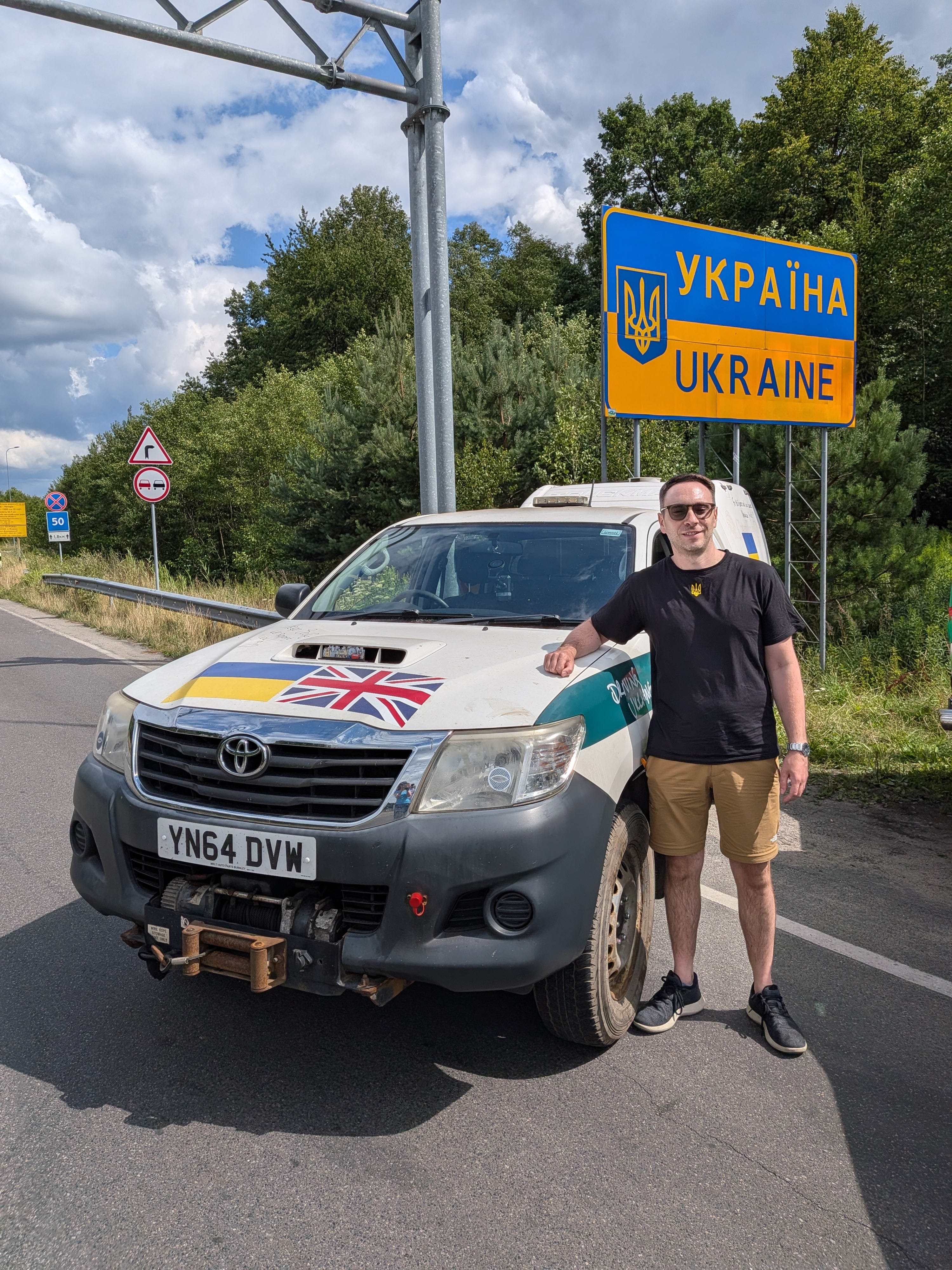
I visited Lviv as part of the Driving Ukraine convoy, delivering life-saving vehicles to military and humanitarian organisations in Ukraine. If you would like to support this ongoing mission, you can still sponsor us here.
Excellent stuff. I felt exactly the same when I last visited Kyiv.