

Borrowed Faith
On Christianity and Christianism

International affairs this week have had a bizarrely early modern feel. The President and Vice President of the United States have drawn themselves into a war of words with the Pope. JD Vance has taken to explaining Catholic theology to the Bishop of Rome, whilst Trump has posted images of himself appearing to pose as Jesus. The most extreme accounts have suggested the US threatened the Catholic church with schism and murmurs of a rival papacy. It is a strange state of affairs, just one year into the reign of the first-ever Pope from the United States.
There is a broader trend at play here. The populist right across America and Europe is developing a strange relationship with Christianity. It champions the faith as a bastion of tradition and the basis for identity, whilst simultaneously pulling away from much of its mainstream teaching and, as this week has made vividly clear, finding itself at odds with the very institutions that have carried it through history.
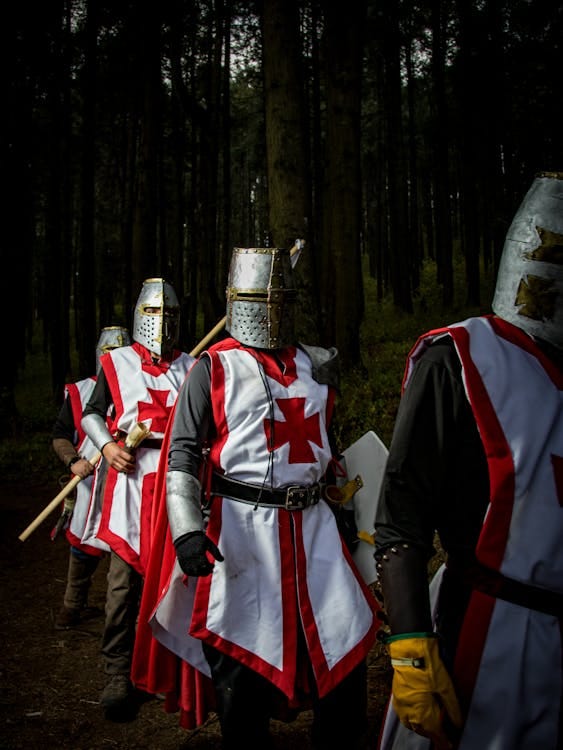
The difference can broadly be seen as Christian vs Christianist. The former is the practice of the faith, rooted in its history, theology and thinking. The latter is identitarian. It takes the symbols of the faith and uses them to form a political and national identity rather than a religious one. While this might encourage some towards the faith, the overlap is limited. It is mostly performative and often oppositional, rooted in a way of thinking that sees Christianity as the basis for Western civilisation, yet shows little curiosity about the faith itself. It operates largely in an exclusionary way, defining and excluding people of other faiths rather than drawing them towards a set of beliefs.
We see this across the populist right. Tommy Robinson and his supporters have increasingly embraced Christian imagery. Reports show it is driven less by faith than by a sense that Christianity is central to Englishness, and that the decline of the former endangers the latter. The faith is embraced as a defensive perimeter rather than a set of beliefs, with the theological content ignored or selectively interpreted.
This is not confined to the fringes. Nigel Farage has long invoked Christianity as central to British identity, while elements of the Conservative right have increasingly reached for similar language. Robert Jenrick made his infamous “Psalm Sunday“ gaffe last Easter. Across Europe, from the governments of Central and Eastern Europe to the nationalist parties of the West, the same pattern repeats. Christianity gets deployed as a civilisational marker, a shorthand for a particular vision of European identity, with little engagement with what the faith demands of its adherents.
Christianism itself often becomes a confused set of symbols and beliefs. It celebrates liberalism as a product of Christian thought, particularly in Northern European countries, whilst remaining deeply sceptical of liberalism in practice. Other religions are attacked for their positions on women or gay rights, whilst Christianism frequently facilitates the same discrimination and hostility towards those groups. Rather than following any coherent theological tradition within the faith, it simply grafts half-formed impressions of Christianity onto convenient ideologies.
Christianism serves a useful purpose to the populist right. Caught between competing interests and tilting towards economic liberalism while trying to retain less well-off voters, populism often struggles to articulate a coherent ideology. Tying itself to Christianity imbues a sense of historical depth and community. Policies that might otherwise appear as a ragbag of grievances and instincts acquire, when wrapped in the imagery of Christian civilisation, the appearance of a tradition being defended rather than a movement being invented.
The trend comes as British faith continues to wane and diversify. Recent reports of a Christian revival among Gen Z were ultimately retracted due to flawed methodologies. Christian worship continues to decline, and faith-based politics remains rare. There is little religious pressure on issues like abortion or gay marriage in the UK, and where it does exist, it fails to make much of a political mark. The other awkward thing for attempts to create a religious right movement in the UK is that Christian faith is often strongest among migrant communities, whether Eastern European Catholics or Protestants from Commonwealth Nations. Indeed, Britain’s most openly religious party, the Christian Alliance, is arguably its most diverse.
It remains, however, difficult to disentangle the Christian right and its Christianist form. Partly this is because individual beliefs are hard to interrogate and criticise -- after all, we should not be making windows into men’s souls. But there is also a mutual entanglement between those of faith and those adopting its imagery. There are serious, intellectual Christians in the mix who see the populist right as a vehicle for achieving their policy goals. Danny Kruger is an obvious example. But the Christianists also need these people to give their appropriation of the faith a veneer of credibility.
The problem for the true believers is one of simple arithmetic. They are a small minority within a coalition overwhelmingly dominated by civilisationalists for whom the theological content of Christianity is largely irrelevant. They lend disproportionate credibility to a movement that does not fundamentally share their concerns, lending it intellectual and moral seriousness. Much like the Vance/Vatican dispute, they stand to get jettisoned when the political arithmetic matters.
This makes it different from previous incarnations of faith-based politics. British politics has always had religious elements. Tory High Anglicans and Labour Methodists each brought religiously informed approaches to social problems, and politicians from other faiths have done likewise. In Europe, many of the post-war developments in social democracy were driven by leaders with deep faith. Yet this pivot towards Christianism is something else entirely. It is more performative, more exclusionary. While the religious traditions that shaped politics sought to apply faith to the world’s problems, Christianism uses religious identity and heritage as an anchor for populism, with little interest in what that faith demands.
The consequences of this sort of politics are already visible in the United States, where MAGA Christianity represents the most developed form of Christianism yet seen. It has produced a politics which repeatedly invokes religious imagery without any real concept of what it means, or even where movies end, and scripture begins. A faith-inflected identity politics in which the cross functions as a tribal marker that has become dominant, and religious language is deployed to sanctify political grievances rather than interrogate them.
The greater strength and plurality of Christian denominations in the US have made this a strangely symbiotic relationship. Some churches have become more Trumpian than Christian, their congregations shaped more by political identity than theological tradition. The faith gets remade in the movement’s image rather than the other way around. While churches, like the Catholics, with a strong universalist identity resist, many more American churches are basically uncritical of Trump, and often swept up in almost worshipping the man.
The Christianist tide has not yet risen in British politics. Faith is far less strongly professed than in the US, and significantly less intertwined with politics. We remain uneasy about committedly religious politicians, while religions themselves don’t necessarily map onto partisan positions. The building blocks of something similar are emerging, however. There is a new trend in the rhetoric of the populist right, in the lazy invocations of Christian heritage, and those who find themselves in church not because they have found God but because they feel a culture under threat.
Full co-option by the radical right would be damaging for the faith. Christianity reduced to a tribal marker, hollowed of theology, remade in the image of political grievance, is not Christianity preserved, but Christianity consumed. The institutions, the traditions, the intellectual inheritance that serious believers have spent two millennia developing - these do not survive being pressed into the service of populism.
There is a deep irony in all of this. The populist right claims to be defending a civilisation shaped by Christianity, yet its relationship with the faith is more often one of consumption rather than stewardship. The institutions it claims to champion get bullied when they speak inconveniently, as the Pope has discovered. The theology it invokes gets rewritten when it proves inconvenient, as Vance has demonstrated. And the believers who rely on it for influence will find, in time, that the movement was never really theirs. What is being defended is not Christianity but a political project that has found Christianity useful. When the usefulness expires, it will likely move on without a backward glance.
